

Company Policy Habits to Reduce Energy Consumption
bldgcontrols • March 26, 2018

March 26, 2018

There are endless reasons for a business to concentrate on energy efficiency in the work building. Electricity costs are rising. Customers want the businesses they buy from to be environmentally friendly. A green company culture is desirable from potential employees. However, when it comes down to the brass tacks, many organizations find it difficult to identify ways to become more reduce energy consumption and be efficient. Consider these workplace policy improvements to help your building operations cut down on energy use.

Be Smart About Windows and Light

Businesses should use the windows that they have. Far too many office buildings are lined with windows but have shades closed at all times. Inside the building, every light switch is turned on, filling rooms with artificial illumination. This is not only unnecessary, but it is also wasteful. Depending on what direction windows are facing, shades could and should be open for a majority of the day. During cooler months of the year, natural light’s energy can both bring warmth and visibility to offices. During hotter months, shades can be adjusted, so light still enters the building. Trees, both outside and inside, can help to disperse light, so that offices are not too bright or too warm.

Let Your Computers and Laptops Rest

Most people leave their computers and laptops on; it is just a habit. It is easier to keep programs that are being used open and running. While this might save a couple minutes each day, it wastes a lot of electricity over time. Companies should implement policies to not only shut down devices when the workforce leaves the office, but even unplugging power cords and chargers to avoid waste to  phantom power. Be conservative with energy during work hours too. For example, computer and laptop settings can be changed to go into automatic sleep mode if they are left unused for more than 15 minutes. Not only is it good to give the machine a break, but it will also reduce the amount of energy wasted and electricity costs.

Use A Retail Energy Supplier

To run a business successfully, a million balls need to be juggled. There is always something to do, improvement to be made, or new advancement to incorporate. Sometimes, to make sure all components of the business are on track, it is best to delegate tasks.

Businesses can incorporate similar delegation with their energy needs. For companies in a deregulated market, they can switch to a retail energy supplier and see tremendous benefits. Not only will they get the best natural gas and electricity rates, but they will also get price protection for those rates, unparalleled customer service, and real cost savings. Additionally, a retail energy supplier will regularly update its clients on the latest technology and methods for reducing energy use and waste.

Set Better Energy Goals

What gets measured gets improved. If a business wants to start wasting less energy, they should first assess what they are doing and where they are most wasteful. This might start simply by looking at the energy bill and setting a goal of a lower number for the next month. It might, however, be more involved, including an energy audit and getting an analytics system set up, so the business can more precisely review how much energy they are using and where the energy use is concentrated. A thorough analysis is conducted, and further details pinpoint where a business building is most wasteful, including the time of day, day of the week, particular machine operations, and more.

Relax the Dress Code

In summer, energy bills see a spike when the outdoors heat up, and HVAC systems run constantly to maintain a comfortable indoor environment. Constant outdoor heat can be accentuated by strict office dress codes, when people are required to wear heavy, long pants; long sleeves; full suits; uniforms; and more. For most days of the year, this type of dress may be unnecessary. Many offices rarely see clients or suppliers come into the office, and much work includes virtual communication with talks over the phone or emails. This creates an opportunity for organizations to loosen the dress code, so employees can keep cool without needing to blast air conditioning to maintain comfortable indoor conditions. This saves a lot of energy and utility costs in the process.

Excessive energy consumption and wastefulness can become a habit. To break this routine, new ones must be created. It takes a little bit of discipline, but offices will see a big difference in their operating cost energy bills if they make the effort. For more extensive methods of increasing energy efficiency, please  contact us.

By 7004697973 November 12, 2025
This is a subtitle for your new post
A picture of an image holder on a white background.
By Hibu Websites November 12, 2025
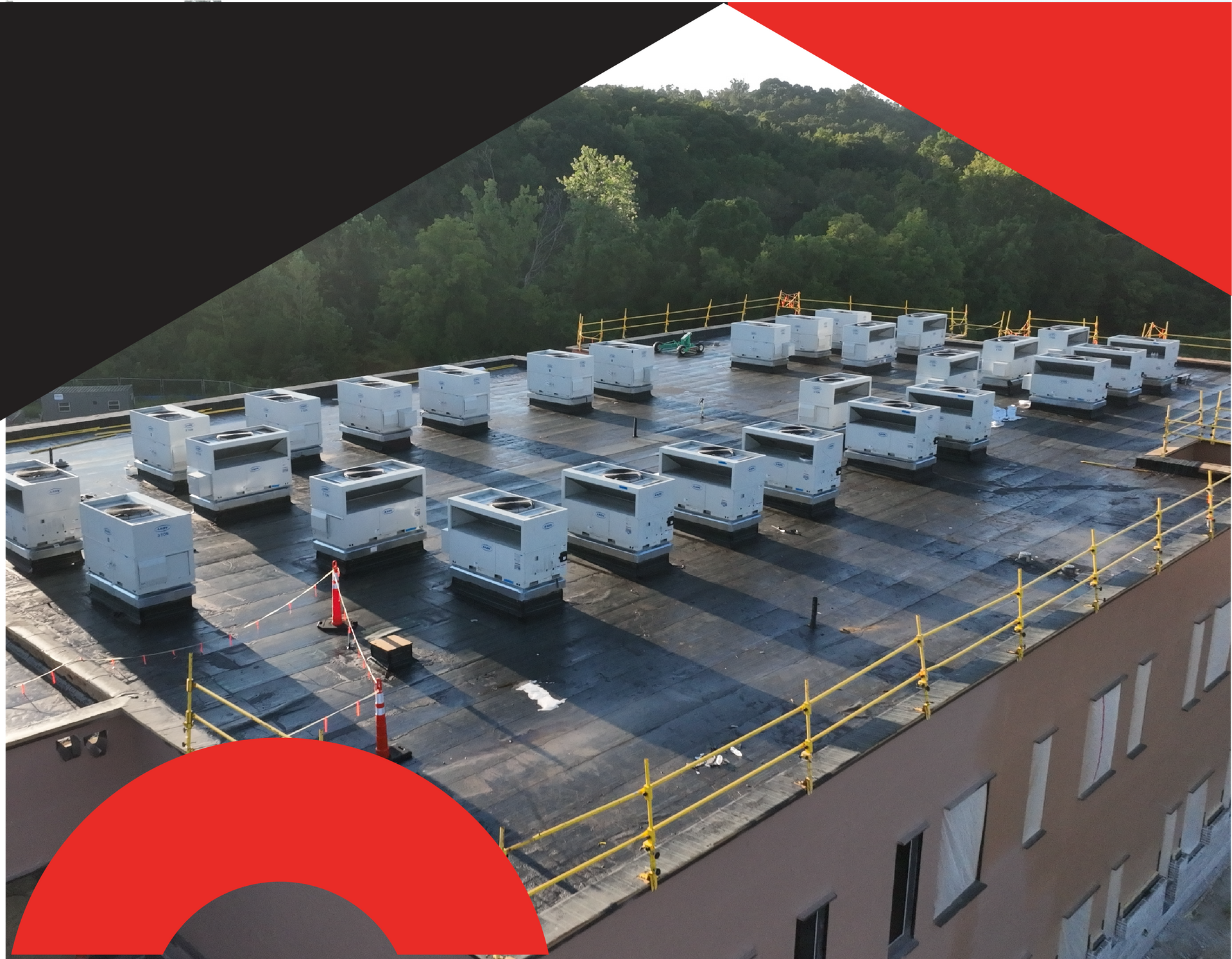
When purchasing new rooftop units (RTUs), the immediate focus often lands on the upfront costs: the purchase price and installation. However, a deeper look reveals that these initial expenses are only a small fraction of the overall financial commitment. To truly understand the long-term financial implications of your investment, it is crucial to evaluate the Total Cost of Ownership (TCO) . WHAT IS TOTAL COST OF OWNERSHIP? TCO encompasses the complete lifecycle costs of your facility and its equipment, providing a comprehensive view of both short-term and long-term expenses. Beyond the initial purchase and installation costs, TCO includes ongoing operational expenses such as energy consumption, maintenance, repairs, and eventual replacement. By adopting a TCO-focused approach, buyers can make more informed decisions that align with their financial and operational goals. WHY TCO MATTERS Uncovering Hidden Costs Many RTU-related expenses are not immediately apparent at the time of purchase. These can include: Energy Consumption: RTUs with lower energy efficiency ratings may have lower upfront costs but can lead to significantly higher energy bills over time. Maintenance and Repairs: Frequent maintenance or costly repairs for less durable units can add up quickly, impacting your budget. Downtime Costs: Breakdowns can disrupt operations, leading to additional expenses from lost productivity or temporary cooling/heating solutions. Compliance Costs: Adapting older, less efficient units to meet evolving energy regulations can result in unexpected expenditures. Optimizing Long-Term Savings Investing in energy-efficient RTUs might involve higher initial costs, but these units typically deliver substantial savings through reduced energy consumption. Over time, the lower utility bills and fewer maintenance needs can offset the upfront expense, making these models more cost-effective in the long run. Durability and Lifespan High-quality RTUs with a longer lifespan can help delay the need for replacement, further optimizing the value of your investment. Units built for durability also tend to perform more reliably, minimizing disruptions and associated costs. MAKING AN INFORMED DECISION Evaluating the TCO of RTUs allows for a side-by-side comparison of different models based on key factors such as: Energy Efficiency Ratings Maintenance Requirements Durability and Build Quality This analysis helps you strike the right balance between upfront costs and long-term value, ensuring that the unit you choose supports both your financial objectives and operational needs. THE BIGGER PICTURE: FINANCIAL & ENVIRONMENTAL IMPACT Considering TCO is not just about saving money—it’s also about making smarter, more sustainable choices. Energy-efficient RTUs not only lower operational costs but also reduce carbon footprints, aligning your investment with environmental stewardship and compliance with green building standards. Focusing solely on the initial purchase price of an RTU can be a costly mistake. By incorporating TCO into your purchasing process, you gain a holistic understanding of the unit’s true cost over its lifespan. This proactive approach minimizes surprises, maximizes cost-effectiveness, and ensures your investment delivers value for years to come. Before purchasing your next RTU, take the time to evaluate its TCO—your future budget will thank you. Contact your BCS representative to explore more on Total Cost of Ownership and how we can support your financial and operational goals.

By bldgcontrols July 9, 2018
The average American spends 93% of their life indoors. For a school aged child, that is spent largely at school. According to National Center for Education Statistics (NCES), there are almost 99,000 public K-12 schools in America and the average public-school building in the U.S. is 42 years old. Our students are spending their days […] The post The Importance of HVAC to the K-12 Learning Environment appeared first on Building Controls and Services, Inc..

Show More →